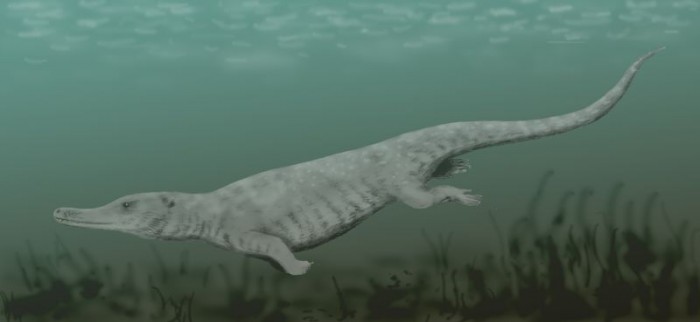
Image credit: Nobu Tamura
Well, as you can tell from the picture, whales have evolved quite a bit since the days of the Remingtonocetus. And so have their brains. But the Encyclopedia of Marine Mammals discusses brain evolution in terms of the encephalization quotient. Apparently, this is a normal way to discuss brain evolution however arcane it may sound.
This brain evaluation strategy was developed by anthropologist Harry Jerison to compare brain size across different species. “Encephalization quotient is a measure of observed brain size relative to expected brain size derived from a regression of brain weight on body weight for a sample of species.” Right…
Basically, this quotient allows scientists to look at brain size based on a scale that takes into consideration body size. “For example, a species with an EQ of 2.0 possesses a brain twice as large as expected for an animal of its body size.”
Just to give you an idea of the scale, humans are listed at 7.0 and many members of the dolphin family rank close to 4.0, second only to humans. But this scale doesn’t work very well with the largest whales because their bodies are so huge that it diminishes their EQ to less than .5. Meanwhile, whale ancestors like the Remingtonocetus range closer around .25 to .49.
So this EQ scale is interesting, but it really just focuses on brain size in comparison to body size and that really doesn’t tell you too much when discussing the largest animals on earth. Reducing the blue whale to an EQ of .21 just doesn’t seem right. Maybe it’s time for the encephalization quotient to evolve.
Leave a Reply